 how-to
7 Daily Habits to Balance Hormones Naturally for Longevity
Last Updated: November 2, 2026
Quick Summary
You can balance hormones naturally by repeating daily habits that support steady blood sugar, healthy muscle, good sleep, and managed stress. Build your plate around whole foods, do resistance training two or three times a week, aim for seven to nine hours of sleep, and use tools like slow breathing to manage cortisol.
- A hormone-supporting plate is half vegetables, a palm of protein, a thumb of healthy fat, and a fist of fiber-rich carbs.
- Two or three resistance training sessions per week is a realistic starting point for supporting muscle and metabolism.
- Aim for seven to nine hours of sleep and keep a consistent bedtime to support hormones that follow daily rhythms.
- Ten minutes daily of paced breathing, such as inhaling four seconds and exhaling six, can help many people feel calmer.
- Add one new habit per week over 30 days instead of stacking them all at once.
Table of Contents
- Why Hormone Balance Matters for Longevity
- Signs of Hormone Imbalance You Should Not Ignore
- Foods That Support Hormone Balance: Build Your Plate
- Exercise and Hormone Balance: Move for Muscle and Metabolism
- Sleep and Hormone Health: The Recovery Window
- Stress Management and Cortisol Regulation
- How to Balance Hormones Naturally: A 30-Day Plan
- When to Get Help: Testing, Supplements, and Safety
- Frequently Asked Questions
Why Hormone Balance Matters for Longevity
Hormones are chemical messengers that control how your body uses energy, stores fat, builds muscle, and repairs itself. When they drift out of range, the effects show up everywhere: energy, mood, sleep, skin, and long-term health. Many people assume aging is the whole story. It usually isn't.
Here's the key point most guides miss. There is no single "hormone balance" switch. The phrase describes a set of systems working together: thyroid, insulin, cortisol, estrogen, testosterone, and others. Longevity research keeps pointing back to the same foundation: steady blood sugar, healthy muscle, good sleep, and managed stress.
That's why learning how to balance hormones naturally for longevity is less about one magic food and more about daily habits repeated over months. Readers can also explore female hormones services. The good news? Those habits are free, and they compound.
Signs of Hormone Imbalance You Should Not Ignore
Persistent fatigue tops the list. So does weight gain that appears without a change in eating. Other common signs include:
- Trouble falling or staying asleep
- Mood swings, irritability, or low motivation
- Brain fog and poor focus
- Hair thinning or dry skin
- Low libido
- Feeling cold when others are comfortable
One symptom alone rarely means much. A cluster that lasts for weeks is worth a conversation with a clinician.
Watch out: many people blame stress for symptoms that deserve a basic workup. Fatigue and weight changes can have several causes, and guessing delays answers.
Men often dismiss these signals as normal aging. They can check the male hormones service page to see if evaluation fits them. They aren't always.
Foods That Support Hormone Balance: Build Your Plate
Start with whole foods and build from there. A plate that supports hormone balance usually follows a simple pattern: half vegetables, a palm-sized portion of protein, a thumb of healthy fat, and a fist of fiber-rich carbs. This pattern resembles the Mediterranean diet, which has been widely studied in relation to metabolic and heart health.
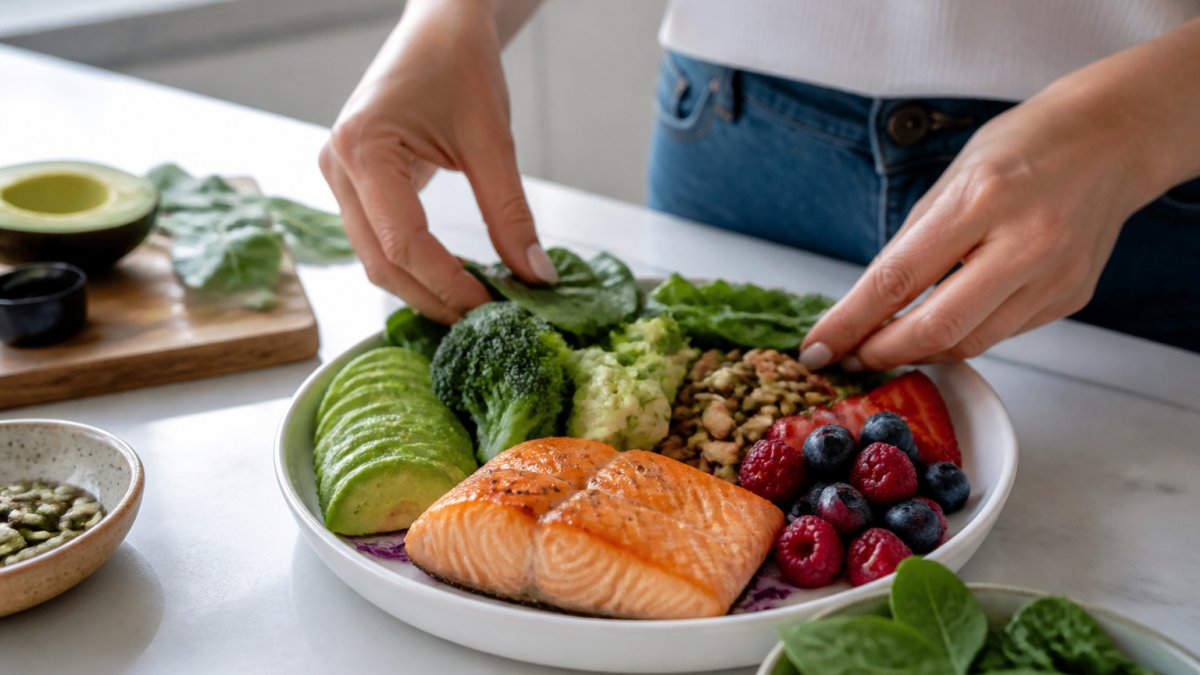
Healthy Fats, Fiber, and Antioxidants
Healthy fats are part of a balanced diet. Good sources include olive oil, avocado, nuts, seeds, and fatty fish. Fiber helps steady blood sugar and supports digestion. Aim for vegetables, beans, and whole grains at most meals.
Colorful produce such as berries, citrus, and vegetables is a common part of a balanced diet. Cruciferous vegetables like broccoli, cauliflower, and Brussels sprouts are widely eaten.
Reducing Added Sugar and Highly Processed Foods
Added sugar can raise blood sugar quickly, and frequent spikes can make blood sugar harder to keep steady. Cut back on soda, sweetened coffee drinks, packaged snacks, and white bread.
A common mistake is going too strict too fast. Try one swap per week instead. Soda to sparkling water. Chips to nuts. Small changes stick.
Staying hydrated is part of a healthy routine.
Exercise and Hormone Balance: Move for Muscle and Metabolism
Resistance training is a helpful habit for overall health. Muscle tissue plays a role in how the body handles blood sugar (Understanding Blood Glucose and Exercise). Two or three sessions per week is a realistic starting point.
Cardio matters for heart health and insulin sensitivity. Brisk walking counts. So does cycling or swimming. Short bursts of higher-intensity work, often called HIIT, can fit into a busy week, but they don't need to dominate your routine.
Weight-bearing exercise is generally associated with bone health, and physical activity is commonly linked to mood and energy.
Sleep and Hormone Health: The Recovery Window
Sleep plays an important role in overall health, and many hormones follow daily rhythms linked to sleep and wake times.
Aim for seven to nine hours. Keep a consistent bedtime, dim screens an hour before bed, and keep the room cool and dark. Caffeine after early afternoon is a common sleep thief.
Watch out: if you snore heavily or wake unrefreshed most mornings, mention it to a clinician. Sleep quality problems can hide behind "I'm just busy."
Stress Management and Cortisol Regulation
Cortisol is a normal stress hormone that follows a daily rhythm, rising in the morning and generally falling through the day (Modified Cortisol Circadian Rhythm: The Hidden Toll of Night-Shift Work). Persistent stress can disrupt that rhythm, and many people find that it affects sleep and energy.
Lifestyle habits are a practical way to support stress management and sleep.
Tools that actually move the needle
- Slow breathing, ten minutes daily of a paced breath (for example, inhale four seconds, exhale six) can help many people feel calmer.
- Daylight and walking, a short outdoor walk, ideally in morning light, is a simple habit many people enjoy.
- Strength training and yoga, both are activities many people use to support overall well-being.
- A hard stop on work at night, a fixed cutoff protects the wind-down window that sleep depends on.
- Consistent sleep and wake times, a regular schedule can make it easier to get restful sleep.
Adaptogens: what the evidence supports
Some people ask about ashwagandha, maca root, or chasteberry. A few practical cautions:
- Ashwagandha may interact with some medications, and people who are pregnant should check with a clinician before use.
- Chasteberry may interact with some medications, including hormonal contraceptives.
- Maca may affect blood pressure in some people.
Talk with a clinician before adding any supplement, especially if you take medication or have a known condition. "Natural" does not mean risk-free, and quality varies between products.
When stress symptoms deserve a closer look
If sleep stays broken, mood keeps dropping, or you wake unrefreshed most mornings despite good habits, mention it to a clinician, since several medical conditions can produce similar symptoms.
How to Balance Hormones Naturally: A 30-Day Plan
Here is a simple plan you can track if you want to build healthier daily habits.
| Week | Focus | Daily Habit | What to Track |
|---|---|---|---|
| 1 | Blood sugar | Protein at breakfast, cut one sugary drink | Energy at 2 p.m. |
| 2 | Movement | Two resistance sessions, daily 20-minute walk | Sleep quality |
| 3 | Fiber and fats | Vegetables at two meals, olive oil or nuts daily | Hunger between meals |
| 4 | Recovery | Fixed bedtime, 10-minute stress reset | Morning alertness |
Add one habit per week. Don't stack them all at once.
If you plan to seek professional support after the month, our guide on how to prepare for a hormone therapy consultation covers what to bring and what to expect.
When to Get Help: Testing, Supplements, and Safety
"Hormone balancing" is a broad phrase rather than a diagnosis. Lifestyle habits such as steady blood sugar, resistance training, sleep, and stress management are commonly recommended for overall health. No single food, tea, or supplement can be relied on to change hormone levels, and no approach guarantees a longer life. Treat anything promising a guaranteed hormonal reset with skepticism.
When hormone testing actually helps
Testing is useful when it answers a specific question raised by specific symptoms. Readers ready to act can book a hormone wellness check. A clinician typically orders labs only after a history and exam point somewhere. Common examples:
- Thyroid tests may be considered when fatigue, cold intolerance, constipation, or unexplained weight change persist.
- Blood sugar tests may be considered when weight gain, cravings, or energy changes are present.
- Estrogen and FSH may be considered during perimenopause when cycle or menopausal symptoms appear.
- Testosterone may be considered when symptoms such as low libido and fatigue are present in men. Men wanting to verify symptoms with testing can book a men's hormone check.
- Cortisol testing is generally reserved for specific clinical reasons.
Hormone levels can fluctuate by time of day, cycle phase, and recent sleep, and a result outside a reference range does not by itself establish a problem. A result is only useful when a clinician reads it alongside your symptoms and history.
Supplement and adaptogen safety
Adaptogens such as ashwagandha, maca, and chasteberry are popular, but evidence varies by herb, dose, and person, and "natural" does not mean risk-free. A few practical cautions:
- Ashwagandha may interact with thyroid medication, sedatives, and immunosuppressants, and has been linked to liver injury in rare cases (Ashwagandha: Usefulness and Safety). Avoid it during pregnancy.
- Chasteberry (vitex) can interact with hormonal contraceptives and dopamine-related medications.
- Maca is generally well tolerated but can affect blood pressure in some people.
- Any supplement can interact with blood thinners, blood pressure drugs, and diabetes medication. Tell your clinician about everything you take, including doses.
Supplement quality can vary between products, so it is reasonable to check labeling carefully.
When to seek care sooner
Book a visit rather than waiting if you notice:
- Symptoms that last more than a few weeks or worsen
- Unexplained weight loss or gain
- A new lump, unusual bleeding, or severe mood changes
- Known conditions such as diabetes, thyroid disease, or heart disease, where hormone symptoms can overlap with your existing condition
Hormone therapy is a medical decision that should be reviewed with a qualified clinician, who can weigh benefits and considerations based on your history.
If you're ready to talk with a clinician, you can reach out to Your Best Life MD for a consultation.
Frequently Asked Questions
Can you balance hormones naturally?
You can support hormone balance naturally through daily habits, but the phrase has limits. Research links whole foods, regular exercise, sleep, and stress management to healthier hormone levels and better metabolic markers, yet no single habit fixes a clinical imbalance. If you have persistent symptoms such as fatigue, mood changes, or irregular cycles, talk to a healthcare professional. A qualified clinician can help you identify what to change and how to measure progress.
Which foods support hormone health?
Foods that support hormone balance include fatty fish, olive oil, nuts, seeds, avocados, beans, whole grains, leafy greens, cruciferous vegetables like broccoli and cauliflower, and antioxidant-rich berries. These provide healthy fats, fiber, and antioxidants as part of a balanced diet. Limit added sugar and highly processed foods, which can spike blood sugar and work against hormone balance. Build meals around protein, fiber, and healthy fats, and aim for a Mediterranean-style pattern most days.
How does exercise influence hormones as you age?
Exercise and hormone balance are closely linked. Resistance training is generally associated with muscle and bone health. Cardio and HIIT improve cardiovascular fitness and metabolism. As you age, maintaining muscle becomes increasingly relevant, and regular resistance sessions are a common recommendation. Start with what you can sustain, add intensity gradually, and pair training with adequate sleep and protein to support recovery and hormone regulation.
When should you talk to a healthcare professional about hormone symptoms?
Talk to a healthcare professional if symptoms such as fatigue, mood changes, sleep problems, weight changes, or low libido persist for several weeks and affect daily life. Hormone testing can be useful when symptoms suggest a specific imbalance and results will change treatment decisions. Bring a symptom log and medication list to your visit. Your Best Life MD has certified physicians and medically supervised nurse practitioners who provide personalized care.